MS SHEET WEIGHT CALCULATOR
Calculate exact weight & area for Mild Steel plates and sheets
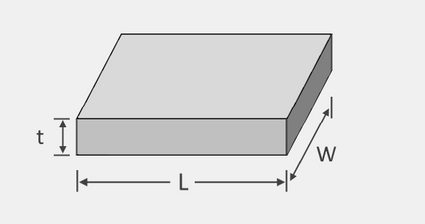
- Enter Length (L) and Width (W) of the MS sheet.
- Enter Thickness (t). Change units freely on the fly.
- Mild Steel is selected by default. You can change this to compare with SS or Aluminum.
- Click “Calculate Weight”.
MS Density Fact: Standard Mild Steel (like IS 2062) has a density of 7850 kg/m³ or 7.85 kg/dm³. This tool uses exact geometric math to calculate your plate’s mass.
MS Sheet Report
| Material | — |
| Dimensions | — x — x — |
| Density | — kg/dm³ |
| Pieces | — |
MS Sheet Weight Calculator Online – Calculate Mild Steel Plate Weight Instantly
Mild Steel (MS) is the undisputed backbone of modern fabrication, manufacturing, and construction. Due to its excellent weldability, high ductility, and extreme cost-effectiveness, MS sheets and plates are utilized in everything from automotive body panels to heavy structural base plates and shipbuilding.
However, steel is heavy, and buying it is expensive. Knowing the exact theoretical weight of an MS sheet before you order it is absolutely critical for several reasons:
- Accurate Cost Estimation: Steel suppliers and service centers price MS plates strictly by weight (per kilogram or per metric ton). Precise mathematical calculations prevent budget blowouts on raw steel orders.
- Lifting & Safety Compliance: Overhead shop cranes, forklifts, and magnetic lifters have strict Safe Working Load (SWL) limits. You must know the weight of a plate to safely move it across your shop floor.
- Freight & Logistics: Shipping companies and flatbed trucks have strict Department of Transportation (DOT) payload limits. Calculating your bundle weight ensures you maximize transport efficiency without risking overloading fines.
The Exact MS Sheet Weight Formula
To calculate the weight of any Mild Steel plate manually without a digital tool, you must find the total geometric volume of the material and multiply it by the standard density of carbon steel.
Why use 7.85? The specific density of standard structural Mild Steel (such as Indian Standard IS 2062 or American Standard ASTM A36) is 7850 kg/m³. When doing the math, this perfectly converts to a factor of 7.85 kilograms per square meter for every single millimeter of thickness. Our calculator automatically handles all these unit conversions (whether you use inches, mm, or cm) in the background.
Sheet vs. Plate: What is the Difference?
While often used interchangeably on the shop floor, there is a distinct industrial difference between “sheet metal” and “steel plate,” entirely defined by the material’s thickness:
- MS Sheet Metal: Generally refers to steel that is less than 3mm (or 1/8 inch / 11-gauge) thick. It can be easily cut with hand shears, formed in press brakes, or rolled into coils.
- MS Plate: Refers to structural steel that is 3mm or thicker. It is highly rigid, cannot be easily bent without heavy hydraulic machinery, and is typically cut using plasma, laser, or oxy-fuel torches. Plate is shipped flat, never coiled.
Quick Reference: MS Sheet Weight per Square Meter ($m^2$)
If you need to quickly estimate weight while away from your computer, use this handy reference chart. It details the standard weight of Mild Steel per square meter based on common industrial thicknesses:
| MS Sheet Thickness (mm) | Weight per Square Meter (kg/m²) |
|---|---|
| 1.0 mm | 7.85 kg |
| 1.5 mm | 11.78 kg |
| 2.0 mm | 15.70 kg |
| 3.0 mm (Plate Transition) | 23.55 kg |
| 5.0 mm | 39.25 kg |
| 8.0 mm | 62.80 kg |
| 10.0 mm (Heavy Plate) | 78.50 kg |